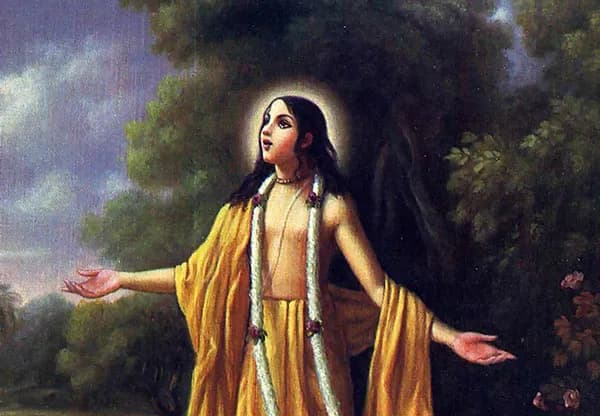
In his Śrī Sanmodana-bhāṣya commentary on Śikṣāṣtaka, Bhaktivinoda Ṭhākura describes the ten offenses to the holy names.
The ten offenses to the holy name are mentioned in the Padma-Purāṇa (Svarga-khaṇḍa 48). They have also been quoted in Hari-bhakti-vilāsa (11.521–4) and Bhakti-sandarbha (Anuccheda 265):
- satām nindā nāmnaḥ paramam aparādhaṁ vitanute; yataḥ khyātiṁ yātaṁ katham u sahate tad vigarhām – To criticize the devotees of the Lord is a very grievous offence to the holy name. How can Śrī Kṛṣṇa tolerate criticism of those great souls who are deeply devoted to the holy name and who spread its glories throughout the world? Therefore criticism of saintly persons and devotees is the first offence against the holy name.
- śivasya śrī-viṣṇor ya iha guṇa-nāmādi-sakalam; dhiyā bhinnaṁ paśyet sa khalu harināmāhita-karaḥ – In this world, those persons who, by mundane intelligence, see a difference in the all-auspicious, transcendental holy names, forms, qualities and pastimes of Śrī Viṣṇu – in other words who consider them to be like material phenomena and thus different from the Lord Himself – commit an offence against the holy name. Furthermore, one who considers the qualities, names and other attributes of Lord Śiva to be different from those of Viṣṇu commits a serious offence.
In his Dig-darśinī commentary on this verse quoted in Hari-bhakti-vilāsa (11.521), Śrīla Sanātana Gosvāmī has said: “Ādi-śabdena rūpa-līlādi, dhiyāpi harināmni ahitam aparādhaṁ karotīti tathā saḥ – the word Ādi refers to the other attributes of Śrī Śiva such as his form and pastimes. If one even thinks that Śiva’s names, forms, qualities and pastimes are different from those of Śrī Viṣṇu, he commits a serious offence against the holy name.”
Śrīla Jīva Gosvāmī has nicely explained the meaning of this statement in bhakti-sandarbha (Anuccheda 265). He says that if the possessive case is used, then the word ca (meaning “and”) must be used after Śrī Viṣṇu. This means that the names, forms, qualities and pastimes of Śiva and those of Śrī Viṣṇu are identical. The meaning here is that the Śiva being referred to is none other than Viṣṇu in another form. The word Śrī in the verse appears in front of Viṣṇu and not in front of Śiva to give prominence to Viṣṇu. The word nāma-aparādha used with reference to Śiva signifies that the name Śiva here simply indicates Śrī Viṣṇu. The name of Śiva has also been listed in this way in the thousand names of Viṣṇu. Therefore the oneness referred to simply means that Śiva is nothing but a manifestation of Viṣṇu in another form. Consequently one should not see any difference between them. Otherwise if one thinks that Śiva is a separate and independently powerful Lord, that is an offence to the holy name. - guror avajñā – To disregard the spiritual master who is established in all the truths regarding the holy name, considering him to be an ordinary man possessing a perishable body composed of material elements, is the third offence against the holy name.
- śruti-śāstra-nindanam – The fourth offence is to find fault with the Vedas, the Purāṇas that are in the mode of goodness [some are considered to be in the lower modes] and other scriptures.
- tathārtha-vādo – The fifth offence is to consider the glories of the holy name to be exaggerated.
- hari-nāmni kalpanam – The sixth offence is to ascribe one’s own imaginary meaning to the holy name.
- nāmno balād yasya hi pāpa-buddhir na vidyate tasya yamair hi śuddhiḥ – Persons who have the tendency to commit sinful actions on the strength of the holy name cannot be purified by any artificial processes of yoga, such as Yama (control of the senses), niyama (control of the mind), dhāraṇā (steadying the mind), dhyāna (meditation) and so on. This is certain.
- dharma-vrata-tyāga-hutādi-karma-śubha-kriyā-sāmyam api pramādaḥ – To consider routine religion, penances, renunciation, sacrifices and other ordinary pious activities in the material mode of goodness (sat-karma) to be equal to the transcendental holy name of the Lord is negligence and is thus considered an offence.
- aśraddadhāne vimukhe ’py aśṛṇvati yaś copadeśaḥ Śiva-nāma-aparādhaḥ – To instruct the glories of the holy name to faithless persons who are averse to hearing and chanting the holy name is also an offence.
- śrutvāpi nāma-māhātmyaṁ yaḥ prīti-rahito ’dhamaḥ ahaṁmamādi-paramo nāmni so ’py aparādha-kṛt – Those who, in spite of hearing the astonishing glories of the holy name, maintain the conception that “I am this material body” and that worldly objects are “mine”, and who display no persistence in or love for the utterance of the holy name, are also offenders to the holy name.
It is essential to chant the holy name free from these ten kinds of offence. A chanter of the holy name does not have to endeavor to dissipate sins by sat-karma, nor does he endeavor to accumulate pious credits like the fruitive workers. Such fruitive activities are no longer under his jurisdiction. In other words he has already relinquished the authority as well as the obligation to perform them.
If, however, one commits any offence against the holy name, he should constantly chant the holy name, feeling very aggrieved at heart. By such constant chanting of harināma, there will be no opportunity to commit further offences and all previous offences will be destroyed.
This is stated in the Padma-Purāṇa (Svarga-khaṇḍa 64):
nāma-aparādha-yuktānāṁ
nāmāny eva haranty agham
aviśrānti prayuktāni
tāny evārtha-karāṇi ca
Only the holy name is able to destroy the sins of persons who are infested with nāma-aparādha. Therefore one should constantly chant the holy name of the Lord. By this process, all offences will be dissipated and one will obtain love for Kṛṣṇa, the highest attainment of life.
When all offences have thus been nullified, attachment will awaken for the holy name. At that time complete spiritual perfection will be attained. Here “complete spiritual perfection” implies love for Kṛṣṇa (kṛṣṇa-prema). This is the second instruction of Śrī Caitanya Mahāprabhu.
The Primary Names of the Lord
In his Bhajana-rahasya, Śrīla Bhaktivinoda Ṭhākura comments on the primary names of the Lord:
The innumerable people in this material world have many different kinds of desires. Even so, Bhagavān is supremely merciful and appears in this world as His different names, to fulfil these various desires. All perfection is attained by harināma, even if it is chanted while eating, drinking, sleeping or moving about. Furthermore, the benefits it bestows are beyond any consideration of place, time, rules and so forth. All of the Supreme Lord’s potencies are invested in His names.
The holy names are of two kinds: primary (mukhya ) and secondary (gauṇa ). Names related to the material world, like brahma, Paramātmā and Jagadīśa, are secondary. Primary names are also of two kinds: those that are endowed with majesty (aiśvarya-para ) and those that overf low with sweetness (mādhurya-para ). Names like Hari, Nārāyaṇa and Vāsudeva are full of opulence, and names like Kṛṣṇa, Madana-mohana, Govinda, Gopīnātha and Rādhā-ramaṇa are full of sweetness. From the names of Śrī Bhagavān that are related to this world (that is, the secondary names), one attains sense enjoyment (bhoga ) and liberation (mokṣa ), from aiśvarya-para names one attains the aiśvarya-prema of Vaikuṇṭha, and from mādhurya-para names one attains vraja-prema. The sādhaka chanting harināma will take shelter of a specific name according to his own mood and will thus have his heart’s desire fulfilled.
A prayer to attain attachment to the holy name is given in the f ifth verse of Śrī Kṛṣṇa-nāmāṣṭaka:
agha-damana-yaśodā-nandanau! nanda-sūno!
kamala-nayana-gopī-candra-vṛndāvanendrāḥ!
praṇata-karuṇa-kṛṣṇāv ity aneka-svarūpe
tvayi mama ratir uccair vardhatāṁ nāmadheya
O Nāma, possessor of inconceivable glories, may my affection for You continue to increase, day and night. O Agha-damana! O Yaśodā-nandana! O Nanda-sūnu! O Kamala-nayana! O Gopīcandra! O Vṛndāvanendra! O Praṇata-karuṇa! O Kṛṣṇa! You have innumerable forms. May my attachment to them always increase.
As the rāgānuga-sādhaka chants the holy name under the guidance of pure devotees, he prays to Nāma Prabhu in great distress, “O Nāma Prabhu, please manifest in my heart, along with Your pastimes that relate to each name.”
Agha-damana – “He who protected His friends by killing the demon Agha.” The word agha means ‘sin’ and damana means ‘to destroy’. He destroys the sins in the heart of the sādhaka, making it pure, and then He Himself comes to reside there. In relation to mādhurya-rasa, Agha-damana has another meaning: “He whose darśana destroys the gopīs’ feelings of separation and thus bestows great joy upon them.” During the day Śrī Kṛṣṇacandra goes to the forest, causing the vraja-sundarīs to burn in the fire of separation from Him. When He is with them at night, He relieves their burning in separation from Him, and He appears as pleasant as the cool moon as He enjoys many pleasurable activities in rāsa-līlā. Thus, He tastes mādhurya-prema-rasa.
Yaśodā-nandana – ‘The son of Yaśodā’. All the good qualities of Kṛṣṇa’s affectionate mother are also found in Him. Therefore, one of His names is Yaśodā-nandana. Yaśo dadāti iti yaśodā. In other words, Mother Yaśodā is famous for her vātsalya-bhāva. The mood of this verse is, “May the compassionate Yaśodā-nandana, who possesses the same qualities as His mother, appear in my heart.”
Nanda-sūnu – ‘The son of Nanda’. Śrīmad-Bhāgavatam (10.8.46) states:
nandaḥ kim akarod brahman
śreya evaṁ mahodayam
yaśodā ca mahā-bhāgā
papau yasyāḥ stanaṁ hariḥ
[Mahārāja Parīkṣit inquired:] What most auspicious activity did the very fortunate Nanda Bābā perform? And what kind of austerity did the supremely fortunate Yaśodā perform that the Supreme Lord Himself drank her breast milk with His lotus mouth?
By chanting this name of Kṛṣṇa, the sādhaka prays, “May the son of the supremely munificent and most fortunate Nanda Mahārāja, Nanda-nandana Śrī Kṛṣṇa, shower His mercy upon me.”
Kamala-nayana – ‘Lotus-eyed one’. “May Kamala-nayana Śrī Kṛṣṇa, whose half-closed eyes resemble a red lotus due to His nocturnal amorous pastimes with His beloved vraja-devīs in the nikuñjas, manifest within my heart.”
Gopīcandra – ‘The moon of the gopīs’. When Śrī Kṛṣṇa sees the rising full moon, remembrance of the moon-like faces of the vraja-devīs awakens in His heart.
Vṛndāvanendra – ‘The Lord of Vṛndāvana’. This refers to He who makes the inhabitants of Vṛndāvana blissful by His unique quality of prema-mādhurya.
Praṇata-karuṇa – ‘He who is merciful to the surrendered’. Śrī Kṛṣṇa displays His mercy and compassion to those who are surrendered to Him by making them taste His caraṇāmṛta. Remembering the mercy Kāliya-nāga received when Śrī Kṛṣṇa placed His lotus feet on Kāliya’s heads, the gopīs sing, “Praṇata-dehināṁ pāpa-karṣaṇam – Your lotus feet destroy the past sins of all souls who surrender unto them.”
Kṛṣṇa – This name is derived from the verbal root kṛṣ meaning ‘to attract’. Kṛṣṇa attracts everyone with His prema-mādhurya, and in this way, bestows the bliss of divine love upon them.
Devotees pray according to their transcendental sentiments; thus the Supreme Lord appears to them according to their prayers and makes them joyful. The sādhaka chants a specific name of the Supreme Lord to increase his attachment to Nāma Prabhu.
Meditation on Prātaḥ-līlā
Govinda-līlāmṛta (2.1) describes the early morning pastimes (prātaḥ-līlā ) as follows:
rādhāṁ snāta-vibhūṣitāṁ vrajapayāhūtāṁ sakhībhiḥ prage
tad-gehe vihitānna-pāka-racanāṁ kṛṣṇāvaśeṣāśanām
kṛṣṇaṁ buddham avāpta-dhenu-sadanaṁ nirvyūḍha-go-dohanaṁ
susnātaṁ kṛta-bhojanaṁ sahacarais tāṁ cātha taṁ cāśraye
After the kuñja-bhaṅga-līlā, or niśānta-līlā (pastimes at night’s end), Śrī Rādhā-Śyāmasundara return to Their respective abodes and lie down on Their beds. The condition of Śrī Kiśorī in Jāvaṭa is indescribable as She burns in separation from Her beloved. Śrī Rūpa and Rati Mañjarīs are absorbed in their service to Her and give Her encouragement, again infusing Her with life. Sometimes Jaṭilā, sometimes Mukharā and sometimes Paurṇamāsī enter Śrī Kiśorī’s quarters, and at this time Śyāmalā also comes. Kiśorī and Śyāmalā become immersed in joking with each other. In this way, the pastime always takes on newer and newer aspects. Rūpa, Rati and other mañjarīs render intimate service to Śrīmatī by bathing Her, decorating Her and so forth, and at the same time, they remind Her of Śrī Kṛṣṇa’s pastimes.
rādhā snāta vibhūṣita, śrī-yaśodā-samāhuta,
sakhī-saṅge tad gṛhe gamana
tathā pāka-viracana, śrī-kṛṣṇāvaśeṣāśana,
madhye-madhye duṅhāra milana
kṛṣṇa nidrā parihari, goṣṭhe go-dohana kari,
snānāśana sahacara saṅge
ei līlā cintā kara, nāma-preme garagara,
prāte bhakta-jana-saṅge raṅge
ei līlā cinta āra kara saṅkīrtana
acire pāibe tumi bhāva-uddīpana
Śrī Kiśorī and Her sakhīs depart for Nanda-bhavana. On the way, they meet Śrī Śyāmasundara and many pastimes full of rasa take place. Our Gosvāmīs have revealed these pastimes in their writings. Upon reaching Nanda-bhavana, Kiśorī starts to cook and prepares many tasty dishes on the countless stoves that surround Her.
Śyāmasundara is sleeping in His home. Yaśodā-maiyā awakens Him, and upon seeing the nail-marks on the body of her dear son (lālā ), she becomes sad and says, “The limbs of my lālā are as soft as the petals of a blue lotus. Why have the boys hurt Him in their wrestling matches? And His limbs are smeared with so much mineral pigments! Alas, alas! What to do? I do not know how to put an end to this.”
Kundalatā jokingly says, “Your lālā is performing rāsa at night.” But the word rāsa is unknown to Yaśodā-maiyā. Then, after expressing affection for His mother, Śyāmasundara jumps up from bed and goes to milk the cows. Upon His return, He bathes, eats and then leaves for cowherding. Kiśorī shyly accepts some of Her beloved’s remnants and returns to Jāvaṭa with Her sakhīs.
Many other pastimes take place amidst all these līlās, and it would be very difficult to describe them all. A premī-bhakta performs bhajana while remembering these pastimes, which are alluded to here, and tastes their rasa even in the stage of sādhana.
[CC-by-NDNC Bhakta Bandhav]