Śrīla Bhaktivinoda Ṭhākura’s Bhajana on the Second Verse
tuṅhu daya-sagara tarayite prāṇī
nāma aneka tuyā sikhaoli āni
O Nāma Prabhu, You are an ocean of mercy. To deliver the souls, You have brought Your many names to this world and taught everyone to chant.
Śrīla Bhaktivinoda Ṭhākura said, “O Kṛṣṇa, O Mahāprabhu, You are very kind. You brought the holy names to this world.” These names and the names of Guru and Vaiṣṇavas are all very sweet. Kṛṣṇa distributes His names along with His power and potency. Whoever receives these names is very fortunate. These holy names have many śaktis.
sakala śakati dei name tohārā
grahaṇe rakhali nāhi kala-vichara
You have put all Your power in Your Names, and You have not made any rules regarding the time for chanting Them.
Śrī Nāma is cintāmaṇi, more than a touchstone, and is equal to Kṛṣṇa Himself. Nāma and nāmī are non-different. And this name is distributed everywhere. In every corner of the world, people chant and remember harināma. Kṛṣṇa arranges everything for the spreading of His name.
śrī nāma cintāmaṇi tohari samāna
viśve bilaoli karuṇā nidāna
Your Names are wish-fulfilling jewels equal to You, and You have distributed Them throughout the world, O ocean of mercy!
The kindness of harināma is not dependent on any place, and it is not possible that somebody can save and hide it from others. It is also increasing more and more like the interest of an investment. Today you plant one seed of wheat and sometime later you get twenty seeds. One person chants harināma and whoever hears him changes. Harināma is parama-uddhara. It doesn’t discriminate. Anyone and everyone can chant and dance, singing, ‘Haribol’ and ‘Hare Kṛṣṇa!’ This is karuṇā-śakti. People may engage in many nonsense activities, but as long as they are not offensive, nāma-śakti will give them energy and taste.
tuyā daya aichana parama udara
atiśaya manda nātha! bhaga hāmāra
Such is Your great mercy. I, however, O Lord, am extremely unfortunate.
nāhi janamala name anurāga mora
bhakti-vinoda-chitta duḥkhe vibhora
Alas, I have no attachment to Your Names. The heart of Bhaktivinoda is overwhelmed with sorrow.
Some say that if harināma is everything, why do we sing all these songs? But Śrīla Bhaktivinoda Ṭhākura knows the process of properly chanting harināma, and thus wrote Śaraṇāgati, Kalyana-kalpa-taru, and other kīrtana books.
The Śikṣāṣṭakam and Kṛṣṇa’s Morning Pastimes
This verse connects to prataḥ-līlā in aṣṭa-kālīya-līlā, from between approximately six and nine o’clock.
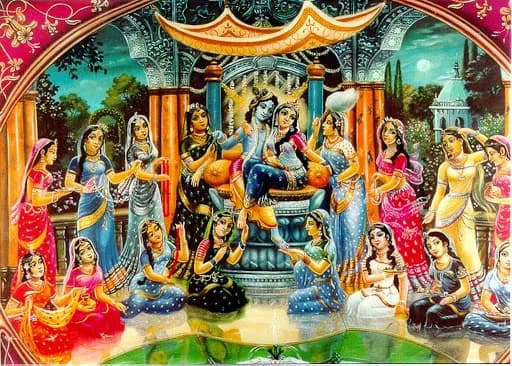
When Kṛṣṇa wakes up, Yaśodā-maiyā wipes His face, hands, and feet with a soft towel that has been dipped in hot water, and gently massages His limbs. Then she offers Him butter and some sugar candy. Kṛṣṇa opens His eyes, but falls back to sleep. Yaśodā thinks, “Oh, He must still be very tired due to herding the cows in the forest for the whole previous day.” She closes the door to Kṛṣṇa’s room and asks the peacocks to not call out “Kṛṣṇa”. She also asks the cuckoos not to call out, “Gopāla, Gopāla, Gopāla.” And to the deers and monkeys and other forest animals, she tells not to make any noise because Kṛṣṇa is sleeping. All the sakhīs and mañjarīs come, but Yaśodā also asks them not to talk and to be careful to not make too much noise when they move. She has so much love for Kṛṣṇa. Rohiṇī Mātā, Rādhārānī—all came with many food preparations for Kṛṣṇa and are anxiously waiting for Him to wake up.
Kṛṣṇa does not sleep alone. The sakhīs and mañjarīs come to Him and sometimes pinch Him, and sometimes they give Him some sweet, which He eats and then continues sleeping. Why does He keep sleeping? He knows that as soon as He gets up, His mother will become busy.
Now the cows are mooing. If Kṛṣṇa does not come, they do not give milk. Therefore Kṛṣṇa gets up and quickly goes together with Śrīdhāmā, Sudāmā, and the other sakhās to milk the cows. When they get out of the house, they see how the pathway is decorated with so many fragment flower petals.
Raghunātha dāsa Gosvāmī describes in his Vilāpa-kusumāñjali how beautifully the Vrajavāsīs decorate the pathways. He prays, “When will the day be mine, when I will sweep and decorate the pathway for Śrīmati Rādhārānī?”
Kṛṣṇa goes to the cowshed and first washes the cows’ udders. Then He starts milking them. As soon as the cows see Kṛṣṇa, their milk automatically starts flowing from their udders. The calves fill up their bellies with milk, and smile at Kṛṣṇa and invite Him to also drink. Kṛṣṇa and the sakhās fill up their pots and bring them to mother Yaśodā who makes panir, rasgullas, rabri, many types of burfis, and other sweets. Rādhārānī also cooks many preparations with fresh milk for Kṛṣṇa.
After milking the cows, the sakhās go the the gardens where they collect fruits and flowers and bring them to Rādhārānī who makes many tasteful preparations with these fruits. They do not only make juice and fruit salad with them, but also many types of chutney, and they mix them in many other preparations. They make fresh fruit juice and put them in gold and silver pots for Kṛṣṇa to take with Him to the forest.
This is a short glimpse of the līlā that happens between six and nine o’clock. At the end of this līlā, Yaśodā and the sakhīs beautifully decorate Kṛṣṇa and the sakhās. Kṛṣṇa wears a turban with peacock feathers and many jeweled ornaments when He goes to the forest for cowherding.
śyāmaṁ hiraṇya-paridhiṁ vanamālya-barha-
dhātu-pravāla-naṭa-veṣam anuvratāṁse
vinyasta-hastam itareṇa dhunānam abjaṁ
karṇotpalālaka-kapola-mukhābja-hāsam
Śrīmad-Bhāgavatam 10.23.22
He is dark-complexioned like a fresh raincloud, and His yellow cloth, which defeats the splendor of gold, shimmers against His body. His head is decorated with a peacock feather, and every part of His body is ornamented with designs that are drawn with various colored minerals. Sprigs of new leaves adorn His body, and around His neck is an enchanting forest-flower garland of five colors. Dressed in this way, He appears as a fresh, youthful, expert dancer. He rests one hand upon His sakhā’s shoulder and with the other He twirls a pastime lotus. His ears are decorated with earrings, curly locks of hair splash against His cheeks, and His lotus face blossoms with a gentle smile.
Kṛṣṇa is wearing a vaijayantī-mālā, and on His head is a turban decorated with fragrant forest flowers. His beautiful limbs are covered by a dress made of peacock feathers, which He wears only because His beloved peacocks offered their feathers to Him. Kṛṣṇa accepts and respects any offering that is done with love, no matter how small or insignificant it might seem to be. This is called love.
When Kṛṣṇa walks in the forest, all the trees and creepers bend their branches down to Him and decorate Him with their flowers. The peacocks fly to the top of the trees and collect fruits for Kṛṣṇa, which they cut with their beaks, and all the squirrels, mongoose, and different birds come out and give presentations to Kṛṣṇa.
When will the day come, when these līlās appear in my heart? By hearing about these līlās, greed arises in the heart of the sādhaka, and he prays to Gurudeva, who then prays to Yogamāyā. Thus the sādhaka establishes a relation with Paurṇamāsī Yogamāyā, who connects him to nitya-līlā. The sādhaka then continuously prays:
rādheśa-keli-prabhutā-vinoda-
vinyāsa-vijñāṁ vraja-vanditānghriṁ
kṛpālutādyākhila-viśva-vandyāṁ
śrī paurṇamāsīṁ śirasā namāmi
Raghunātha dāsa Gosvāmī
Bowing my head I offer praṇāma unto Śrī Paurṇamāsī-Devī, who is very expert in arranging the delighted variegated pleasure pastimes of the master of Śrīmatī Rādhikā. Her lotus feet are worshiped by all the Vrajavāsīs; and who, due to being endowed with all transcendental qualities, beginning with compassion, is worshipable for everyone in the entire universe.