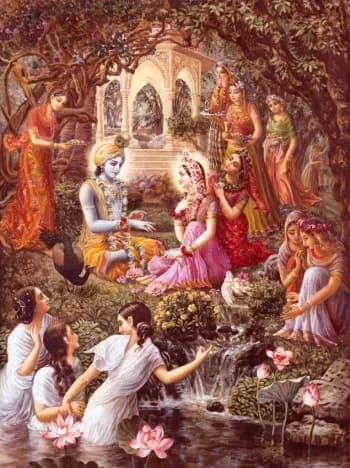
Previously, we heard how Kṛṣṇa happily accepts the service of Śrīmatī Rādhārānī and Her sakhīs and mañjarīs. There are many mañjarīs—some of them being Kastūrī Mañjarī, Rasa Mañjarī, Guṇa Mañjarī, and Vilāsa Mañjarī. A gopī is accepted in their fold by the mercy of Rūpa Mañjarī. Śrī Rūpa Mañjarī, Śrī Rati Mañjarī, Lavaṅga Mañjarī, Mañjūlalī-māñjarī, and Śrī Rasa Mañjarī eagerly and lovingly serve Śrīmatī Rādhārānī, supplying Her musk and various other articles. Śrīla Narottama dāsa Ṭhākura prays, “When will I serve Śrī Rādhā-Mādhava with these nitya-siddha-mañjarīs?” Many devotees serve Rādhā-Mādhava and there are also many devotees who serve in sakhya- and vātsalya-rasa. But the prema-sevā rendered under the guidance of the mañjarīs is especially pleasing to Rādhā-Mādhava. Although there are different groups of sakhīs and mañjarīs, they all serve under the guidance of Śrīmatī Rādhārānī. The nitya-siddha-mañjarīs—like Rūpa Mañjarī, Rati Mañjarī, and Lavaṅga Mañjarī—are not ordinary. They are also parakīya-nāyikās (heroines). Rasa Mañjarī and Kastūrī Mañjarī serve with their groups. Rūpa Mañjarī leads all the mañjarīs in collectively serving Śrī Rādhā-Kṛṣṇa. She helps everyone follow the instructions and advice of Lalitā-devī. She teaches everyone how to become perfect in their service to Śrī Rādhā-Mādhava. Mahāprabhu would never accept anyone’s service without Svarūpa Dāmodara Gosvāmī’s approval. Similarly, Rādhārānī doesn’t accept the service of those who don’t serve under the guidance of Śrīmatī Lalitā-devī. 307Our Guru-varga have expressed their loyalty to Lalita-sakhī in their writings. In the song Śrī Rādhā-kṛṣṇa-pada-kamale, it is written: “Lalitā sakhīra, ayogyā kiṅkarī vinoda dhariche pāya—Vinoda, the unqualified maidservant of Lalitā-sakhī, clasps the lotus feet of the Divine Couple.” He prays for entrance into the group of Lalitā-sakhī in the following song:śrī-rūpa-mañjarī sāra śrī-rati-mañjarī āra lavaṅga-mañjarī mañjūlalī śrī-rasa-mañjarī-saṅge kasturikā-ādi raṅge prema-sevā kare kūtūhalī
The most dear Śrī Rūpa Mañjarī along with Śrī Rasa Mañjarī, Anaṇga Mañjarī, Maṅjūlalī, Śrī Rati Mañjarī, and Kasturikā Mañjarī, enthusiastically perform loving service to Yugala-Kiśora.
Lalitā-devī is always arranging for the service of Yugala-Kiśora. In his Śrī Lalitāṣṭakam (7), Śrīla Rūpa Gosvāmī describes how Lalitā-sakhī offers new māñjarīs unto Rādhā’s lotus feet:heno kāle kabe, vilāsa māñjarī, anaṅga māñjarī āra āmāre herīya, ati kṛpa kori’, bolibe vacana sāra eṣo, eṣo, sakhī! śrī-lalitā-gaṇe, janibo tomāre āja gṛha-kathā chaḍi’, rādhā-kṛṣṇa bhajo, tyajiyā dharama-lāja se madhura vāṇī, suniya e jana, se duṅhāra śrī-caraṇe aśrāya loibe, duṅhe kṛpa kori’, loibe lalitā-sthāne lalitā sundarī, sa-daya hoiya, koribe āmāre dāsī sva-kuñja-kutīre, dibena vasati, jani’ sevā-abhilāsī
When will Vilāsa-māñjarī and Anaṅga-māñjarī mercifully begin to speak the sweetest essence of words upon seeing me? They will say, “Come, come, Sakhī ! From now on, you will be included in Śrī Lalita-sakhī’s group of attendants. Giving up your household and leaving behind all fear of breaking the rules of moral religious conduct, just come along with us and worship Śrī Rādhā-Kṛṣṇa!” Hearing the sweet words of these two sakhīs, I will unhesitatingly take shelter of their lotus feet. Showing me their mercy, they will lead me into the presence of Śrī Lalita-sakhi. Then, the most beautiful Lalita-sakhī will be very compassionate towards me and accept me as one of her own maidservants. She will give me residence in her own kuñja-kutīra, knowing me to be eager for rendering service.
Rādhikā obeys Lalitā, who thus fulfills that young girl’s desire. Without the guidance of Lalitā-devī’s nearest and dearest Rūpa Māñjarī, you cannot serve the Divine Couple. Desiring her guidance, Narottama dāsa Ṭhākura has prayed to Rūpa Gosvāmī in his Prārthanā (40):yāṁ kām api vraja-kule vṛṣabhānu-jāyāḥ prekṣya sva-pakṣa-padavīm anuruddhyamānām sadyas tad-iṣṭa-ghaṭanena kṛtārthayantīṁ devīṁ guṇaiḥ sulalitāṁ lalitāṁ namāmi
I offer obeisances unto the most charming Śrī Lalitā-devī, who is a mine of all good qualities. Upon seeing any young girl anywhere in Vraja and understanding that she is inclined towards her dear friend Śrīmatī Rādhikā, Lalitā at once tells Rādhikā that She must accept that girl into Her own party.
Our Guru-varga has explained in this regard that, in order to cultivate mañjarī-bhāva, you must follow the associates of Śrī Caitanya, such as Rūpa and Sanātana Gosvāmī. Śrīla Narottama dāsa Ṭhākura has indicated this in his heartfelt longing in Prārthanā (39):prabhu lokanātha kabe saṅge lañā jābe śrī-rūpera pāda-padme more samarpibe
“When will my Prabhu, Śrīla Lokanātha Gosvāmī, take me and offer me to the lotus feet of Śrī Rūpa Gosvāmī?”
Śrī Rūpa Mañjarī sees how everyone is serving and then offers these services unto the lotus feet of Śrī Rādhā-Kṛṣṇa:śrī-rūpa mañjarī-pada seī mora sampada seī mora bhajana-pūjana seī mora prāṇadhana seī mora ābharaṇa seī mora jīvanera-jīvana
The lotus feet of Śrī Rūpa Mañjarī are my ultimate wealth. To contemplate upon and serve those lotus feet is my highest method of worship and adoration. They are the treasure of my life, even more dear to me than life itself. They are the ornaments of my life and the very life of my life.
She will reply, “Her name is Campaka Mañjarī. She serves very nicely. She has a good mood; You should accept her.” Now the eight prominent māñjarīs will be described. Gopāla Guru Gosvāmī and Dhyānacandra Gosvāmī have written about the identities of the mañjarīs in their Śrī Śrī Gaura-govinda-arcana-smaraṇa-paddhati 294–297:śrī-rūpa paścāte āmi rahiba bhīta hañā doṅhe pūnaḥ kahibena āmā pāne cāñā sadaya hṛdaye doṅhe kahibena hāsi kothāya pāile rūpa! ei nava dāsī śrī-rūpa-mañjarī tabe doṅhā vākya śuni mañjūlālī dila more ei dāsī āni ati namra-citta āmi ihāre jānila sebā-kārya diyā tabe hethāya rākhila hena tattva doṅhākāra sākṣāte kahiyā narottame sevāya dibe niyūkta kariyā Prārthanā (19)
Watching me standing behind Śrī Rūpa in fear, Śrī Rādhā and Kṛṣṇa, being compassionate, will smilingly ask Śrī Rūpa, “Where did you find this new maidservant?” Hearing Their words, Śrī Rūpa Māñjarī will reply: “Mañjūlālī brought her and gave her to me. I can see that she is very meek and humble, therefore I have engaged her in service and kept her here.” Śrī Rūpa Māñjarī, after disclosing these details to Rādhā and Kṛṣṇa, will mercifully engage Narottama dāsa in Their service. Śrī Rādhā and Kṛṣṇa will ask Rūpa Māñjarī, “What is her name?”
Rūpa Mañjarī
Śrī Rūpa Mañjarī is the most prominent of all the māñjarīs under the guidance of the priya-narma-sakhīs. On the north side of Lalitānanda-kuñja is Rūpollasa-kuñja. Rūpa Mañjarī’s kuñja-kuṭīra is present there. She has a beautiful bright yellow complexion that resembles gorocana. Her dress resembles the color of peacock feathers. She is thirteen years and six months old. By nature, she is vāma-madhya. The Ṛṣis also address her as Raṅgaṇamālā. She is one day younger than Lavaṅga Mañjarī. Her father’s name is Ratnabhānu and her mother’s name is Yamunā. Her husband’s name is Durmedha; and her mother-in-law’s name is Jaṭilā. Her service is offering golden colored betel-nuts and she is also very expert in rendering the most intimate services unto Śrī Rādhā-Mādhava’s lotus feet. In gaura-līlā she is Śrīla Rūpa Gosvāmī. In the Kiśori-tantra, Śrī Rūpa Māñjarī’s mūla-mantra (or eight syllable mantra) has been given: “Śrim rūpa mānjaryai svāhā.” Her dhyāna is described as follows:kuñjo ‘sti rūpollasākhyo lalitā-kuñjakottare sadā tiṣṭhati tatraiva suśobha rūpa-māñjarī priya-narma-sakhī-mukhya sundarī-rūpa-māñjarī gorocana-samāṅga-śrīh keki-pātramśuka-priya sardha-tridaśa-varṣāsau vāma-madhya tvam aśrita raṅgana-malika ceti pravadanti manīṣinah iyaṁ lavaṅga-mānjarya ekenahna kanīyasī kalau gaura-rasr-rūpa-gosvāmī tvam samāgatā
gorocana-nindi-nijāṅga-kāntīm mayūra-piñchābha-sucīna-vastram śrī-rādhikā-pāda-saroja-dasīm rūpākhyakam māñjarīkam bhaje’ham Śrī Śrī Gaura-govinda-arcana-smaraṇa-paddhati 299
I worship Śrī Rūpa Māñjarī, whose beautiful bodily color puts to shame the golden color of gorocana. Wearing a nice dress resembling peacock feathers and representing her colorful devotional nature, she blissfully serves Śrī Rādhā’s lotus feet.
Rati Mañjarī
Another name of Rati Mañjarī is Tulasī Mañjarī. Her complexion is like that of a flash of lightning. She wears a dress that is studded with many stars. On the southern side of Indulekha’s Kuñja, a forest-bower is present, called Ratyāmubujā-kuñja. This is Rati Mañjarī’s kuñja. She is thirteen years and two months old. By nature, she is dakṣiṇā-mṛḍu. Her father’s name is Vṛṣabha and her mother’s name is Śāradā. Her husband’s name is Divya. The name of her mother-in-law is Sannikā. Her main services are fanning and massaging the Divine Couple’s lotus feet. She is Śrīla Raghunātha dāsa Gosvāmī in gaura-līlā. Her mūla-mantra is: rāṁ rati-mañjaryai-svāhā.Lavaṅga Mañjarī
Lavaṅga Mañjarī resides in an enchanting kuñja called Lavaṅgasukhada-kuñja, which is situated east of Tungavidyā Sakhī’s kuñja. Lavaṅga Mañjarī is one day older than Rūpa Mañjarī. Her body bears the hue of a flash of lightining. She also wears a star-studded dress. She is of a submissive nature. She is always ready for Rādhā-Kṛṣṇa’s service. Her main service is to ornament Śrī Rādhā-Kṛṣṇa and to offer Them garlands of cloves. She is thirteen years, six months, and one day old. Her father’s name is Ratnabhānu and her mother’s name is Yamunā. Her mother-in-law’s name is Suśīlā. Mandalī-bhadra is the name of her husband. She appeared in Śrī Caitanya Mahāprabhu’s pastimes as Śrīla Sanātana Gosvāmī. Her mūla-mantra is: śrīṁ lāṁ lavaṅga-mañjaryai-svāhā.Rasa Mañjarī
Rasa Mañjarī’s kuñja is present on the western side of Citrā Sakhī’s kuñja. The name of her kuñja is Rasānandaprada-kuñja. Rasa Mañjarī is very dear to Rūpa Mañjarī and her qualities are like those of Lavaṅga Mañjarī. Her body resembles the color of a Campaka flower. Her dress is made of the features of swans. She is thirteen years of age and is dakṣinā-mṛdu-svabhāva by nature. Her father’s name is Subhānu and her mother’s name is Prema Mañjarī. Her husband’s name is Vitanka. The name of her mother-in-law is Rambāvatī. She knows how to dress and decorate Śrī Rādhā-Kṛṣṇa in the most wonderful ways, and she always knows where Kṛṣṇa is—she knows how Kṛṣṇa is hiding in different kuñja-kutīras, and will tell Rūpa Mañjarī about His whereabouts. She also paints. In Kali-yuga, she appeared in the pastimes of Mahāprabhu as Śrīla Raghunātha Bhaṭṭa Gosvāmī, although sometimes Śrīla Raghunātha Bhaṭṭa Gosvāmī has also been described as Rāga Māñjarī. Rasa Mañjarī’s mūla-mantra is: rāṁ rasa-mañjaryai-svāhā.Guṇa Mañjarī
Guṇa Mañjarī’s kuñja is present on the north-east side of Campakalatā Sakhī’s kuñja. The name of her kuñja is Guṇānandaprada-kuñja. Guṇa Mañjarī is a very close and dear friend of Rūpa Mañjarī. Her body bears the hue of electricity. She wears a red colored dress like the javā, or hibiscus flower. She is three days younger than Tulasī Mañjarī. Everything she does is for Rādhā-Kṛṣṇa’s happiness. She is submissive and outspoken by nature (dakṣiṇa-prakharā). She is thirteen years, one month, and twenty-seven days old. Her father’s name is Candrabhānu and her mother’s name is Yamunā. Her husband’s name is Gobhata. The name of her mother-in-law is Tārāvalī. She arranges for beds made of leaves and flowers in all the kuñja-kutīras. She also performs service by offering water to Rādhā and Kṛṣṇa. She appeared in Śrī Caitanya Mahāprabhu’s pastimes as Śrīla Gopāla Bhaṭṭa Gosvāmī. Her mūla-mantra is: gāṁ guṇa-mañjaryai-svāhā.Vilāsa Mañjarī
Vilāsa Mañjarī’s kuñja is called Vilāsānanda-kuñja and it is present south-east of Viśākhānanda-kuñja. She also shares a close friendship with Rūpa Mañjarī. Her complexion is like the golden pine flower and she wears a dress that resembles the bees. Her nature is vāma-mṛdvī. She is four days younger than Rasa Mañjarī. She is twelve years, eleven months, and twenty six days old. Her father’s name is Svarbhānu and her mother’s name is Durvala. Her husband’s name is Virambaka. Her mother-in-law’s name is Ramā. Her main service is to serve water and drinks, as well as applying mascara on Rādhā and Kṛṣṇa. She appeared in gaura-līlā as Śrīla Jīva Gosvāmī. Her mūla-mantra is: śrīṁ vāṁ vilāsa-mañjaryai-svāhā.Mañjulālī Mañjarī
Mañjulālī Mañjarī is also known as Līlā Mañjarī. Her kuñja is called Līlānandaprada-kuñja and it is situated on the northern side of Viśākhā’s kuñja. She resides there very happily. She is a dear friend of Rūpa Mañjarī and has many extraordinary qualities. Her body resembles the hue of molten gold. She wears a red colored dress, resembeling the Kiṁśuka flower. She is eternally thirteen years, six months, and seven days old. She is of a contrary nature (vāmā-madhyā). She knows about the moods that swell and abate in Rādhārānī’s mind. She arranges many special dresses for the pleasure of Rādhārānī. She appeared in Caitanya Mahāprabhu’s pastimes as Lokanātha dāsa Gosvāmī. Her mūla-mantra is: śrīṁ mañjulālī-mañjaryai-svāhā.Kastūrī Mañjarī
The name of Kastūrī Mañjarī’s kuñja is Kastūryānanda-kuñja. Her kuñja is on the northern side of Sudevī’s kuñja. This is the place of her residence. She is also of a pure golden color. Her dress is studded with many small mirrors and crystals. Her dress is very clean and bright. She is thirteen years of age and her nature is vāmā-mṛdvī. She decorates Śrīmatī Rādhārānī with many jewels. Her main service is candana-sevā. She pastes sandalwood and has the paste smeared on Kṛṣṇa. She appeared in gaura-līlā as Śrīla Kṛṣṇadāsa Kavirāja Gosvāmī. Her mūla-mantra is: śrīṁ kastūrī-mañjaryai-svāhā. The identities of aṣṭa-mañjarīs in gaura-līlā are listed below:- Rūpa Mañjarī is Rūpa Gosvāmī.
- Rati Mañjarī is Raghunātha dāsa Gosvāmī.
- Lavaṅga Mañjarī is Sanātana Gosvāmī.
- Rasa Mañjarī is Raghunātha Bhaṭṭa Gosvāmī.
- Guṇa Mañjarī is Gopāla Bhaṭṭa Gosvāmī.
- Vilāsa Mañjarī is Jīva Gosvāmī.
- Mañjulālī Mañjarī is Lokanātha dāsa Gosvāmī.
- Kastūrī Mañjarī is Kṛṣṇadāsa Kavirāja Gosvāmī.
- Jāhnavā-devī is Anaṅga Māñjarī.
- Bhugarbha Gosvāmī is Prema Māñjarī.
- Bhāgavata Ācārya is Śveta Mañjarī.
- Nayana Miśra is Nitya Mañjarī.
- Jitāmitra is Śyāma Mañjarī.
- Raghu Miśra is Karpūra Mañjarī.
- Īśāna Ācārya is Mauna Mañjarī.
Excerpted from the Bhakta Bandhav Publication “Śrī Prema-bhakti-candrikā”, Chapter 5 [CC-by-NDNC Bhakta Bandhav]varaṇe taḍit vāsa tārāvalī kamala mañjarī nāma sāḍe bāra varṣa vayasa satata svānanda sukhada dhāma karpūra sevā lalitāra gaṇa rādhā yūtheśvarī hana mameśvarī-nātha śrī nanda-nandana āmāra parāṇa dhana śrī rūpa mañjarī prabhṛtira sama yugala sevāya āśa avaśya se-rūpa sevā pāba āmi parākāṣṭhā suviśvāsa kabe vā e dāsī saṁsiddhi labhibe rādhā-kuṇḍe vāsa kari’ rādhā-kṛṣṇa sevā satata karibe pūrva smṛti parihari’
My body color is like lightning and my dress is adorned with twinkling stars. My name is Kamala Mañjarī and my age is eternally twelve-and-a-half years old. My residence is Svānanda Sukhada Kuñja. My service is to offer camphor to Śrī Rādhā and Kṛṣṇa. I serve in the group of Lalitā, and Śrī Rādhā is my group leader (yūtheśvarī). The beloved of my Svāminī, Nanda-nandana, is my life’s treasure. I aspire to serve the Divine Couple like Rūpa Mañjarī and others, and I will certainly attain this service. This is my deepest aspiration. Oh, when will this maidservant attain all perfection and, residing at Śrī Rādhā-kuṇḍa, serve Śrī Rādhā-Kṛṣṇa, giving up all past remembrances?”