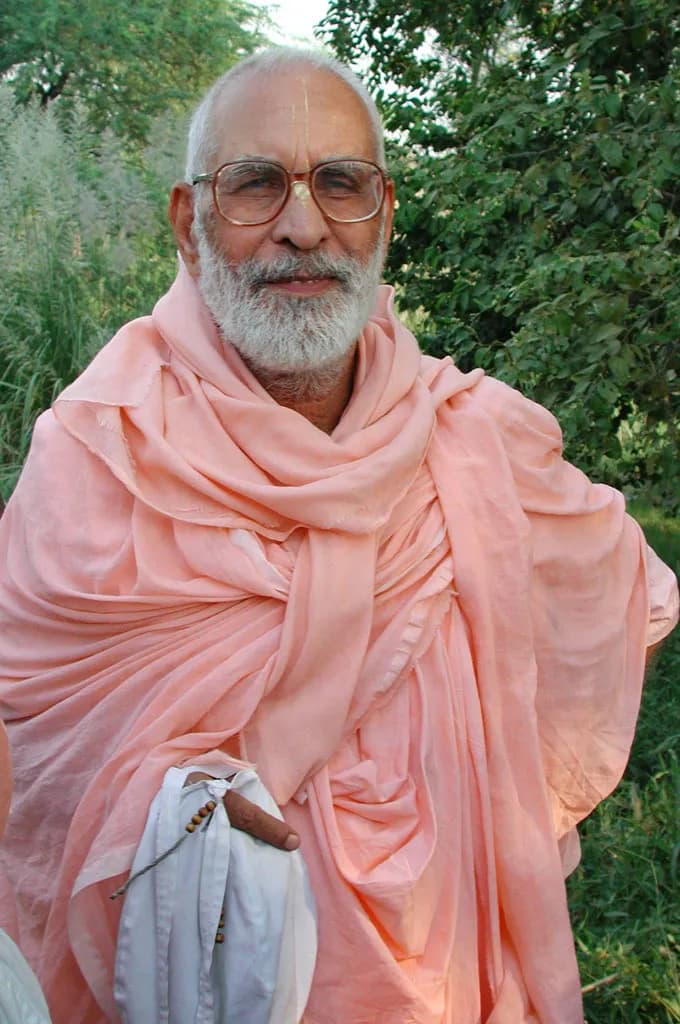
Lecture At Śrī Vasudeva Gauḍīya-maṭha
Śrīla Prabhupāda Bhaktisiddhānta Sarasvatī Gosvāmī Ṭhākura has said that there are five kinds of knowledge:
(1) Pratyakṣa—this knowledge refers to what we realize by our five kinds of senses and by what we see. This is pratyakṣa. But pratyakṣa is not helpful. It is not real. It is only the shadow; it is the perverted reflection of that aprākṛta (transcendental) world. It changes every minute. So, pratyakṣa means direct knowledge. Direct knowledge is not good. We cannot rely on this. If you rely on it then you will have to go in the chain of birth and death that has repeated sufferings and sorrows.
So, Prabhupāda spoke of another form of knowledge. Do you know who Cārvāka is? He propagated the philosophy of eat, drink, and make merry. They say, “We have not seen God. There is no God. The teachings of the Vedas and all the scriptures are quite wrong. The brāhmaṇa s of India cheat all foolish persons. So, there is no God or soul; there is nothing. If anyone has taken many loans, then he will not have to repay in his future lives because there is no other life at all.”
So, this is the philosophy of Cārvāka. It seems very favorable, good, and composed of sweet words. But they deceive their disciples. I will have to say many things but I cannot because time is very short.
(2.) Then comes parokṣa-jñāna. This is the karma-vāda theory of Jaiminī. So many austerities are done in this line. Fire sacrifices and rājasūya-yajñas are done with the intention that “We will taste the fruits of these sacrifices in heaven.” This is called parokṣa-jñāna. In English it means indirect knowledge.
They say, “We will taste pleasure after leaving this world.”
(3.) And after that, comes aparokṣa-vāda. What is the meaning of aparokṣa-vāda? You can know by an example i.e. the theory of Śaṅkarācārya. His theory is called aparokṣa-vāda. They say, “There is no God at all. He has no shape; He has no attributes; He has no power. He does not have anything. But He is not zero. Yet, He cannot be defined by the mind or any words. But there is no shape of God.”
Their philosophy is like the Buddhists. They believe God is like zero. Salvation or sāyujya-vāda is aparokṣa-vāda.
(4.) If we ascend more, we come to adhokṣaja. It is the experience or the knowledge of Vaikuṇṭha. Nārāyaṇa has so much opulence there. He has four hands that hold the śāṅkha (conch), cakra (disc), gadā (club), and padma (lotus flower). He is the Lord of lords. Nārada, Lakṣmī, and all others will offer many stava-stutis (prayers) to Him. He has no appetite; He has no friends; He has no father and mother. He doesn’t have many beloveds. He only has one beloved—Lakṣmī. This is called adhokṣaja-jñāna. We will not return from there.
(5.) And after this comes the knowledge of Goloka-Vṛndāvana. It is called aprākṛta-dhāma. Aprākṛta means a transcendental abode of Rādhā-Kṛṣṇa, gopas, gopīs, Nanda-Yaśodā, and all the Vrajavāsīs. This is called aprākṛta knowledge and the love and affection there is viśuddha (immaculately pure). There is viśuddha-prema there. Caitanya Mahāprabhu has descended to give this.
We don’t want heaven. We don’t want the luxuries of this world. We don’t like to have salvation i.e. mixing ourselves in Brahma. We don’t want śānti. Śānti means annihilation of the ātmā. Then one becomes like a stone. If a stone is broken, then the stone will not say, “I am feeling some sufferings.” And if you give the stone nectar, he will not feel anything. So this salvation is more than murder. It is the annihilation of the ātmā. So all Vaiṣṇavas reject this. In Vaikuṇṭha, the devotees want to serve Him as their Prabhu (master) while they consider themselves as His dāsa (servant). But Caitanya Mahāprabhu has not come to only give this. Caitanya Mahāprabhu is Kṛṣṇa Himself. He also has all the moods of Śrīmatī Rādhikā. And He is adorned with the golden color of Śrīmatī Rādhikā.
20 May 1996 U.K. [CC-by-NDNC Bhakta Bandhav]