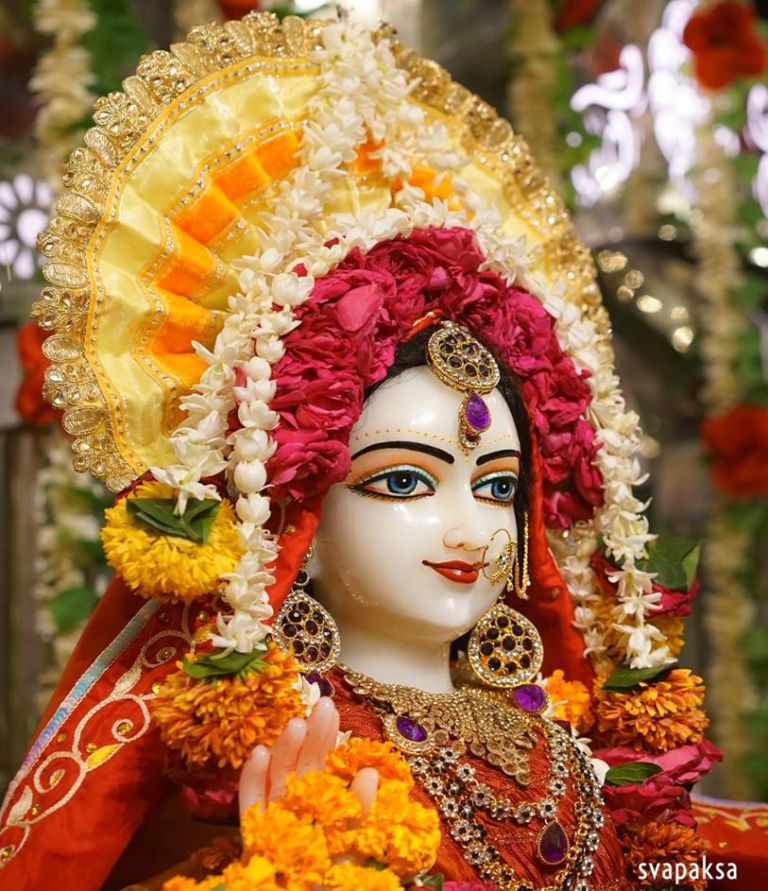
The Gopīs Who Observed The Vow To Worship Kātyāyanī
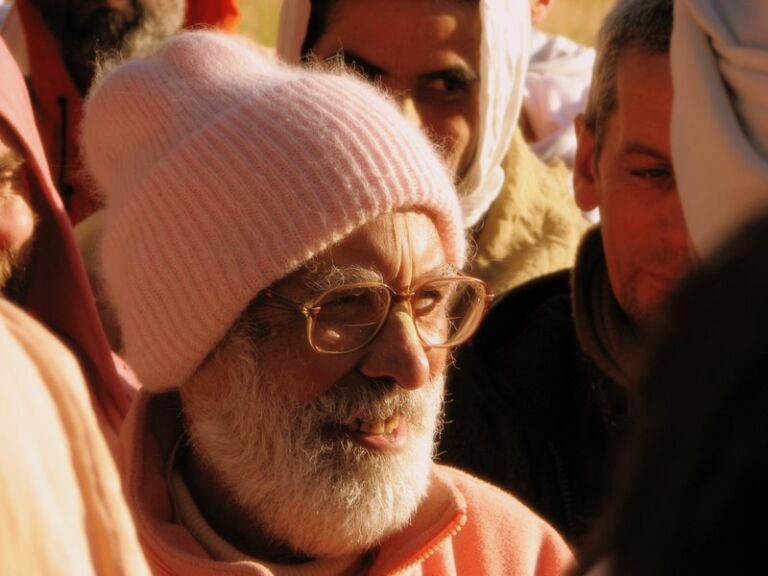
Śrī Śrīmad Bhaktivedānta Nārāyan. a Gosvāmī Mahārāja
hemante prathame māsi
nanda-vraja-kamārikāḥ
cerur haviṣyaṁ bhuñjānāḥ
kātyāyany-arcana-vratam
Śrīmad-Bhāgavatam (10.22.1)
[During the first month of the winter or prewinter frost, the young unmarried vrajakumāris observed the vrata of worshiping Kātyāyanī-devī. For the whole month they ate only haviṣyānna.]
The gopīs who observed the vow to worship Kātyāyanī were young and unmarried. What, then, was Śrī Kṛṣṇa’s age at this time? Kṛṣṇa had left Gokula at the age of three and a half. According to Śrīla Vyāsadeva and Śrīla Śukadeva Gosvāmī, He was seven years old when He lifted the mountain, Girirāja Govardhana, on the little finger of His left hand. After He lifted Girirāja, all the elders and their priests gathered together and told Nanda Bābā, “You should not treat Kṛṣṇa as if He were your son. He is actually not your son. He may be a demi-god, or perhaps He is God, or someone like God. We have heard that Nārāyaṇa Himself has come in the form of Kṛṣṇa, and perhaps it is true. So you should not treat Him like an ordinary boy. Do not bind His hands, and do not chastise or punish Him. He is only seven years old, and yet He lifted a mountain like Govardhana. How is that possible? This is indeed mysterious.”
“Oh,” Nanda Bābā laughed. “I have heard that gopas only become mature and intelligent at the age of eighty. They cannot properly decide anything before then, because their minds are not fixed. Kṛṣṇa is just an ordinary boy.
“God has far more good qualities than even the perfected saints. Such saints do not become angry, and they are not disturbed by hunger, thirst, or any other material distress. They do not steal or tell lies.
“Kṛṣṇa tells lies. He weeps and becomes angry. He plays tricks on people, and He is naughty in so many other ways. He some-times cries for butter and sugar candy. If He does not get what He wants, He becomes furious and hurls all the items in our home onto the ground, and then scatters them here and there.
“This is conclusive proof that He is not God. In any case, even if you would insist that He is God, He is still my son, so I will admonish and punish Him and treat Him as a father should treat his child.”
Nanda Bābā continued to laugh at the notion that Kṛṣṇa is God; then Yogamāyā came, and by her influence, everyone present forgot this idea.
This incident took place during the month of Kārtika, when Śrī Kṛṣṇa was seven years old, and it was just after Kārtika that the gopīs worshiped Kātyāyanī.
There were two groups of gopīs, married and unmarried. Although it was the unmarried gopīs who worshiped Kātyāyanī, the married gopīs like Lalitā, Viśākhā, and Śrīmatī Rādhikā also had pūrvarāga (the gopīs’ tender love for Kṛṣṇa before their first intimate meeting with Him). This is because, although they had met with Him so many times, they always felt the excited anticipation of a first meeting.
The unmarried gopīs were somewhat younger than the married gopīs. Śrīmatī Rādhikā is thirteen and a half years old, and Kṛṣṇa is fourteen. Lalitā is twenty-seven days older than Śrīmatī Rādhikā, and Viśākhā was born on the same day as Rādhikā. Rūpa Mañjarī and Rati Mañjarī are a little over twelve years, so they are about one and a half years younger than Kṛṣṇa. This means that when Kṛṣṇa was seven years old, the gopīs who were engaged in the worship of Kātyāyanī-devī were about six; but they already had love and affection for Him. Their love for Kṛṣṇa was not kāma, amorous affection, because kāma is not possible at such an age. They loved Him deeply, but without kāma.
Kṛṣṇa told those gopīs engaged in worship, “Next year, during the autumn season, I will fulfill your desires.” Then, a year later, when Kṛṣṇa was about eight years old, He played His flute to call the gopīs to the rāsa dance.
It is said that Kṛṣṇa was in Vṛndāvana until He was ten years old, and within that time He performed rāsa-līlā as well as all His Vṛndāvana pastimes. In other words, He appeared to be fourteen years old when He was actually only ten, and the gopīs also appeared to be older than they were. Speaking in a humorous mood, typical of the playful nature of a maidservant of Śrīmatī Rādhikā, Śrīla Viśvanātha Cakravartī Ṭhākura has said that they grew up very quickly because they used to eat so much butter and sugar candy. In actual fact, the reason they appeared to be teenagers is because of the influence of Yogamāyā.
In their previous births, some of the young unmarried gopīs had been personified Vedic scriptures called śrutis, and they are known as śruti-cārī gopīs. Some had been personified Upaniṣads, and are known as upaniṣad-cārī gopīs.* Some had been sages from the Daṇḍakāraṇya forest (daṇḍakāraṇya-ṛṣis), some had been princesses (rāja-kumārīs) from Janaka-purī, and some, daughters of the demigods (deva-kanyā).
Among the gopīs, some had the association of the nitya-siddha gopīs, and they also had pūrva-rāga. These gopīs easily entered the rāsa-līlā, whether they were married or not. [The unmarried gopīs were already betrothed, and therefore they also thought of Kṛṣṇa as their beloved in a paramour mood.] On the other hand, the married gopīs who had pūrva-rāga but did not have the association of nitya-siddha gopīs were stopped from entering. The gopīs described in the above mentioned verse from Śrīmad-Bhāgavatam (10.22.1) had association with the nitya-siddha gopīs. We know this because at the end of the month they invited Rādhikā, Lalitā, Viśākhā, Citra, and all other such gopīs to join them in their worship. This means that they had the association of those gopīs, and consequently they could easily enter the rāsa dance.
This is confirmed in the Śrīmad-Bhāgavatam. The nitya-siddha gopīs and those who had their association entered the rāsa-līlā with-out difficulty, whereas the married gopīs with sons or daughters were checked by Yogamāyā. Even though they had pūrva-rāga, they could not go. It appeared that it was their husbands who had obstructed them, but actually it was Yogamāyā who did so. She had entered the minds of their husbands, fathers, mothers, and other relatives, influencing them to prevent the gopīs from going.
If Yogamāyā had wanted them to join the rāsa-līlā, she would have made duplicate forms of those gopīs. In this way the real gopīs would have been able to leave their homes unnoticed and enter rāsa-līlā. However, she could not help these gopīs, because they had some traces of a consciousness that was not favorable for fully developed paramour love in relationship to Kṛṣṇa (parakīya-bhāva). They still had the conception: “This is my husband, and these are my children.” Their affection was not solely for Kṛṣṇa but was shared with many others.
Excerpted from Gopī-gīta, Introduction
[English Edition CC-BY-ND Gaudiya Vedanta Publications]